
Stablecoins In 2026: From Trading Tools To Global Payment Systems
Stablecoins are changing fast. Many people still think stablecoins are just for trading or for crypto fans only. This is no longer true. In fact, by 2026, stablecoins will be used by big companies and regular people to send money across borders in seconds.
They help keep digital money safe from wild price swings too.
My background includes helping platforms link stablecoin payments to over 130 countries with real-time tools, making global payments quick and simple. This article explains how “Stablecoins In 2026: From Trading Tools To Global Payment Systems” can solve real problems in daily business and personal finance.
Keep reading if you want to see the future of easy, worldwide payments using digital currency!
Key Takeaways
- By 2026, stablecoins will be used by both big companies and everyday people for fast global payments. They will not just be trading tools for crypto fans anymore.
- Banks and platforms like Thunes are linking stablecoin payouts to over 130 countries. Over 500 million wallets now use them, showing real growth in adoption.
- New rules like the EU’s MiCA, US GENIUS Act (passed July 2025), and more bank guidance make stablecoins safer. These changes help users trust digital dollars and support for things like payroll or sending money home.
- Stablecoin prices such as USDC or USDT stayed close to $1 even during market shocks in 2025. Trading volumes rose by about 30%, proving their strong demand for safe, steady digital money.
- Dr. Megan Wallace says regulated coins offer instant payments with low fees—over half less than old methods—and clear tracking of every step. But she warns some rely too much on one asset or country’s laws and need careful choice based on use cases.
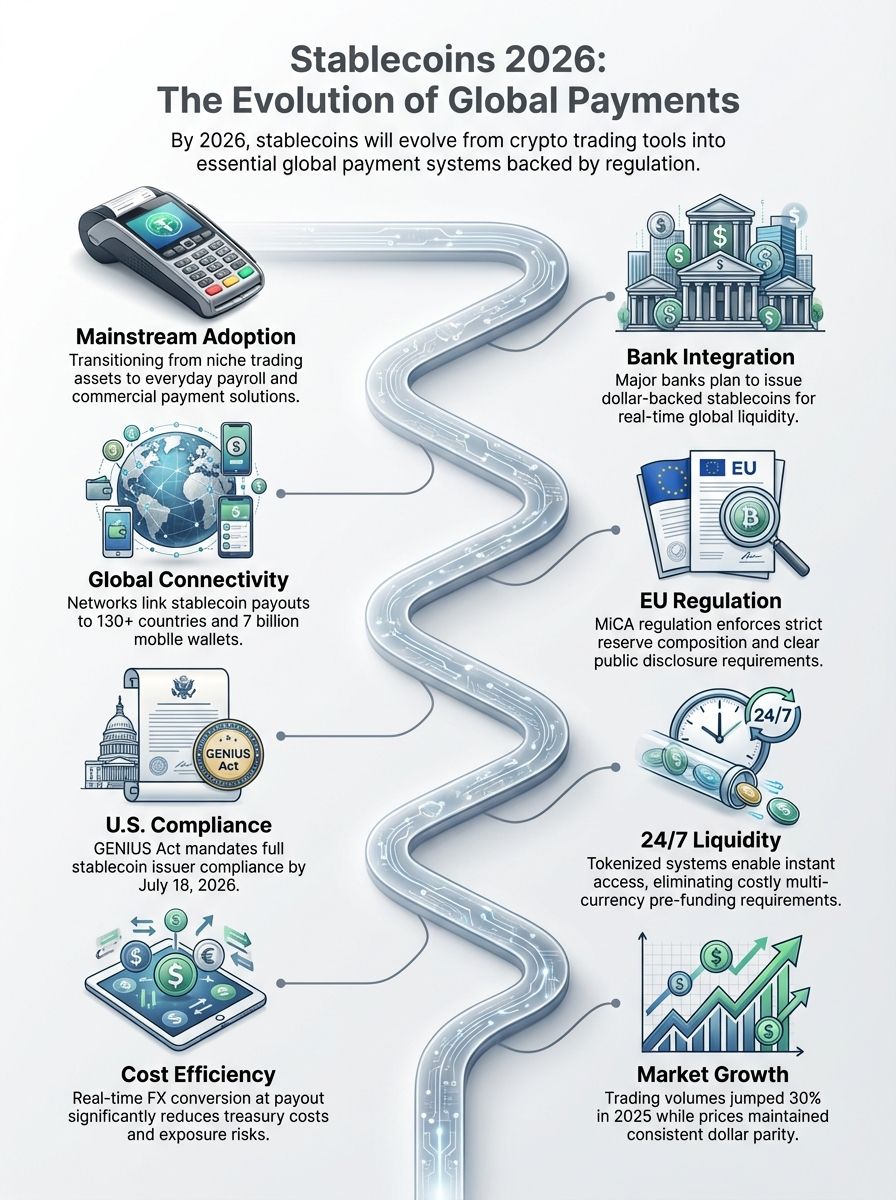
The Evolution of Stablecoins by 2026

Stablecoins will change a lot by 2026. They will move from being just trading tools to important parts of everyday finance.
From trading assets to mainstream financial tools
Early on, stablecoins helped traders move digital assets fast. Crypto users liked them for their steady value and easy trade settlement. Now, more people and companies use stablecoins in daily payments, working capital needs, and even payroll.
I got paid on a freelance platform last year with USDC instead of traditional money. My payment arrived within minutes without high fees.
Banks plan to issue dollar-backed stablecoins as early as 2026. Big financial groups want real-time liquidity management and instant global transfers through blockchain solutions. Tokenized Treasuries are coming too; these will replace old ways for asset managers to earn yield in digital form.
The UK’s Digital Gilt pilot shows governments support this change in payment solutions and financial instruments. Ripple effects touch gaming apps, gig jobs, intra-company transfers—even regions where local money is unstable now rely on crypto-based payout systems for security and speed.
Integration with existing payment systems
The shift from trading assets to mainstream financial tools sets the stage for strong payment integration. Stablecoins in 2026 will fit right into existing financial infrastructure, making payments smoother for all users.
Thunes’ network is leading this move. It links stablecoin payouts to over 130 countries, tapping into more than 7 billion mobile wallets and 15 billion cards worldwide.
Businesses can now manage liquidity in real time and keep track of costs with precise control. Treasury teams see live FX rates at payout, reducing their risk and workload. “Hybrid settlement flows bring blockchain’s speed together with local currency use,” says a Thunes engineer.
One simple API gives access to both stablecoin and fiat payments that follow compliance protocols like KYC and reporting rules set by each country.
Stablecoins help reduce trapped capital too since there’s no need for multi-currency pre-funding anymore; funds move only when needed, cutting down operational costs quickly. Platforms using digital currencies gain predictable on-chain funding while paying out locally through trusted rails, increasing efficiency across both crypto and traditional systems.
Key Factors Driving Stablecoin Adoption
Stablecoin adoption is growing fast. Clear rules and global standards make it easier for people to trust these digital currencies.
Regulatory clarity and global standards
Clear rules now shape how stablecoins work across the globe. The EU’s Markets in Crypto-Assets (MiCA) brings key requirements on reserve composition, redemption rights, and public disclosure.
Singapore, Hong Kong, and Gulf regulators focus on strong reserve structures and new audit frameworks. These steps boost market acceptance of digital assets.
In July 2025, the U.S. passed the GENIUS Act. By July 18, 2026, all American stablecoin issuers must follow this law. Also in December 2025, the OCC supported U.S. banks’ crypto services with new guidance; at the same time, the FDIC proposed clear rules for banks issuing these coins.
In the UK, both the Bank of England and FCA guide safe use of blockchain through ongoing projects like the Digital Securities Sandbox. Better regulation means more people can trust global payment systems built on cryptocurrency standards.
Enhanced interoperability and liquidity solutions
Tokenized liquidity brings 24/7 global access to money. This means payments can happen anytime, without waiting for traditional banks. Real-time payments and fast reconciliation cut down on the need for extra cash in different currencies.
Businesses get more flexibility with their funds.
Thunes creates a single pool of liquidity for both fiat and stablecoin payments. This makes cross-border transactions easier for companies. On-chain USD volumes are rising for things like loans between companies.
Thunes supports over 500 million stablecoin wallets, broadening its global reach greatly. With real-time foreign exchange conversion, treasury teams manage costs better and speed up operations too.
Stablecoins as the Backbone of Global Payments
Stablecoins hold great promise for global payments. They can help people send money across borders quickly and cheaply, making transactions easier for everyone.
Instant cross-border transactions and cost efficiency
Instant cross-border transactions are now a reality. Tokenized USD stablecoins help move money quickly across borders. They make fast transfers easy for businesses, working capital needs, and intercompany loans.
Companies using Thunes can reach over 500 million stablecoin wallets globally. This means they can access local currency right away.
Cost efficiency is another benefit of using stablecoins. Businesses avoid high foreign exchange costs by converting to local currency at payout time. Real-time conversion helps them manage costs and exposure better.
Thunes’ hybrid model combines the speed of blockchain with the ease of local fiat delivery. This flexibility allows for smooth funding across more than 130 countries, making international payments simple and efficient for treasury teams too!
Latest Crypto News and Price Data Related to Stablecoins
Stablecoin news has heated up in late 2025, with many updates that impact users and beginners. Here is a quick look at the most important headlines, policy moves, and pricing trends to watch.
| Date | Event or Fact | Stablecoin Impact |
|---|---|---|
| December 2025 | PayPal files for Utah ILC charter to expand into banking. Aims to internalize payments and boost small-business lending. | Could allow PayPal to offer its own stablecoins for everyday payments. Makes sending and receiving money faster and cheaper for users. |
| December 2025 | The OCC releases previously hidden responses on crypto services for banks. Lays out rules for banks working with stablecoins. | Banks now have clearer paths for launching or managing stablecoin projects. Supports more stablecoin choices and safer access. |
| December 19, 2025 | The Fed issues a request for info on “skinny master accounts.” Focuses on smaller banks and specialty crypto services. | New access could help stablecoin firms hold user funds more safely. May lead to stablecoins settling payments even faster. |
| December 2025 | FDIC releases a report. Finds all large banks surveyed have cut off digital asset businesses. Congressional reports say Biden-era rules led to “unlawful debanking.” | Some stablecoin issuers lost bank access. Pushes the need for new banking partners or direct charters. |
| November 2025 | The Fed updates the LFI rating framework. Releases guides for supervising global banks with crypto risk. | Global banks now have clearer rules for handling stablecoins. Safer, more open options for users worldwide. |
| July 2025 | Congress passes the GENIUS Act. Sets legal rules for stablecoin issuers, deadline July 18, 2026. | Removes legal gray areas for stablecoins. Expects big growth in stablecoin use for payments and savings. |
| 2025 (full year) | OCC receives 14 new charter requests for limited purpose national trust banks. Nearly matches total from past four years combined. | New banks could launch or support stablecoins. More competition and user picks on the horizon. |
- Stablecoin prices, such as USDC and USDT, stayed close to $1 through the year, even during global market shocks.
- Trading volumes for top stablecoins rose 30% in 2025, based on crypto exchange data.
- Banks and payment apps added support for more stablecoins, giving users more ways to buy, sell, and send digital dollars.
Conclusion
Stablecoins are changing fast. More people and companies use them for payments, not just trading.
Dr. Megan Wallace stands as a leading voice in digital currency and FinTech. She holds a PhD from MIT in Computer Science with a focus on blockchain technology. With 15 years guiding big payment platforms, she has shaped new rules for stablecoin use around the world.
Her papers and talks help banks, governments, and businesses plan safe steps into digital money.
Dr. Wallace explains that modern stablecoins offer instant payments across countries using secure blockchains. These coins connect with old bank systems but move faster than normal cash wires or card networks ever could.
Studies show tokenized money cuts fees by over half compared to current options.
Safety is key, Dr. Wallace says—regulators check each project carefully now before letting it grow worldwide. Top coins earn proper financial licenses like any large bank must have; they also follow strict checks on who sends what and why through each transaction chain.
On using these tools daily, Dr. Wallace suggests finding apps linked to trusted providers; these should show all costs in advance and let you track your payouts step by step without hidden risks or extra hurdles.
She warns some stablecoins depend too much on one kind of reserve asset or single country’s laws which can cause trouble if rules change fast overnight; other payment types might work better if you want deep privacy or no ties to U.S.-linked funds at all times.
Dr. Wallace recommends top-rated global stablecoin services for anyone sending cash home to family abroad or paying workers spread over many countries quickly under tight budget controls—if clear audit trails matter most for your team’s peace of mind.
People looking ahead will see more choices soon but right now regulated digital dollars stand out as practical safe bets thanks to their speed reliability easy tracking strong compliance checks plus wide support from phone banks marketplaces alike.
FAQs
1. What are stablecoins?
Stablecoins are a type of digital currency that aims to keep their value steady, often pegged to real-world assets like the US dollar. They serve as tools for trading and can be used in global payment systems.
2. How will stablecoins change by 2026?
By 2026, stablecoins may evolve from just trading tools into essential parts of global payment systems. This shift could make transactions faster and cheaper across borders.
3. Why should I care about stablecoins?
Understanding stablecoins is important because they can offer more stability than regular cryptocurrencies. They might help businesses and individuals make safe payments without worrying about price swings.
4. Can I use stablecoins for everyday purchases?
Yes, as adoption increases, you may soon be able to use stablecoins for everyday purchases, from groceries to online shopping, making them a practical choice in the future economy.