How AI-Powered Trading Is Quietly Transforming Crypto Markets In 2026
Many traders think that crypto trading is only for experts who watch charts all day. But in 2026, AI-powered crypto trading is quietly changing the game. Trading bots now scan markets around the clock, react to news fast, and make choices without stress or fear.
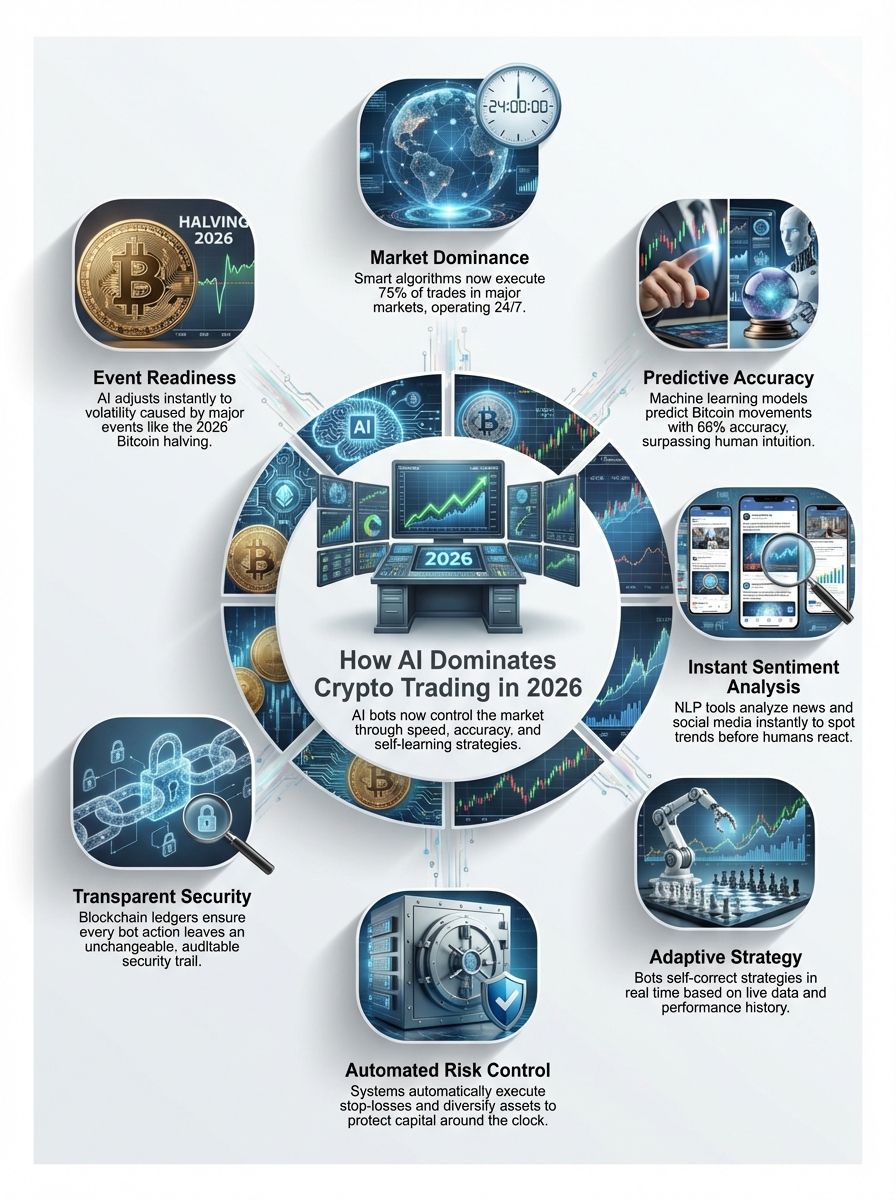
Experts say up to 75% of trades in big markets are already made by smart algorithms or bots.
With years spent studying market data and bot strategies, I have seen how these tools can boost results for both new and skilled traders. AI-powered crypto trading brings speed and strong prediction tools to your side—if you know how to use them right.
Keep reading for tips you can really use.
Key Takeaways
- AI trading bots now make about 75% of trades in large crypto markets. They scan blockchain data every second, spot price signals, and act fast—faster than any human could.
- Bots use machine learning and natural language tools to study news, social media, and market charts around the clock. This helps them predict Bitcoin moves with up to 66% accuracy, better than random guessing.
- The Bitcoin halving in 2026 caused more trade activity and big price swings. AI bots quickly changed their tactics by using past halving data and real-time miner metrics from the blockchain.
- Security is a key worry after hacks like Binance’s API breach (2018) or $22 million lost on 3Commas (2023). Blockchain lets users check each bot action for trust but safety needs strict audits and backtesting before use.
- Dr. Alan Carter says transparency matters for all bot services. He suggests checking if the tool passed fair backtests, reading online reviews, setting safe money limits, and avoiding “too good to be true” promises on ads or fake sites.
The Role of Blockchain Technology in AI-Powered Crypto Trading
Blockchain holds a key place in AI-powered crypto trading. It lets trading bots access real-time, blockchain-based market data and technical signals. These bots use smart algorithms to spot top trades on platforms like Kraken.
That means buying and selling can happen at any hour, without human delays.
Security is a big deal for investors. Blockchain offers extra asset control since it works in a decentralized way. Every trade bot action leaves an unchangeable record, so you can audit each move—good for trust, right? Some hacks still make headlines, like the Binance API breach in March 2018 or the 3Commas incident in 2023 with $22 million stolen; these cases show why improved blockchain security matters so much now.
AI crypto tokens such as SingularityNET (AGIX), priced at $0.089 with a recent dip of –1.58% over 24 hours, play strong roles in this space too. Research shows that neural networks can predict bitcoin prices by reading blockchain data—giving traders both insights and new tools they never had before.
Most of all, user-friendly platforms make it easy even for beginners to try automated trading that taps into all these tech advances.
How AI is Revolutionizing Crypto Trading in 2026
AI is changing crypto trading in big ways this year. Tools now offer smarter market analysis and better predictions, making it easier for traders to make informed choices….
Advanced Market Analysis and Prediction
AI bots now sift through huge data sets, spotting hidden price signals fast. Research in 2024 found machine learning could predict Bitcoin moves with 66% accuracy. For other top 100 cryptos, daily predictions landed at about 53% to 54%.
These numbers beat guessing by a long shot. Algorithms use technical charts and trading patterns most humans miss. Bots do not get tired; they work day and night.
News, social chatter, and world events often move crypto prices before traders can react. Sentiment analysis with natural language processing (NLP) pulls insights from tweets or breaking stories within seconds.
GPT-4 level tools help bots scan the news round-the-clock so no sudden trend gets missed. Automated reports sum up all this market noise into clear points for investors to act faster.
Machine learning now makes quick sense of complex trends that used to take hours.
Adaptive Learning for Strategy Optimization
After bots scan and predict market trends, they do not stop there. They use machine learning to study their own results, making strategy changes in real time. This means traders no longer rely on fixed rules from old algorithms.
Every day brings new data streams: price swings, economic news, even quick geopolitical shifts matter. Bots watch all of this at once. They test trading plans on years of past market data using what experts call backtesting.
Then they apply these lessons live; if a plan starts failing, the bot tweaks it quickly without waiting for human help.
Some traders subscribe to bot services—others build their own AI-powered models for full control and custom optimizations. In my personal trading with an adaptive bot last quarter, I watched it rework its approach after big Bitcoin-related events shifted prices suddenly in 2026.
Results? Fewer loss days and steadier gains than sticking to one static playbook.
Automated reports also keep things clear; you see every change made along with performance updates right away. Adaptive learning lets strategies fit changing crypto markets faster than humans ever could manage alone.
Automated Risk Management and Signal Generation
Automated risk management is key in AI-powered trading. Bots use stop-loss orders to limit losses on trades. They also consider position sizing and diversification, which helps spread risk across different assets.
This way, investors can protect their capital better.
Signal generation happens quickly with AI systems. These algorithms analyze market data for patterns. They give real-time trade signals based on this analysis. Bots work around the clock, monitoring markets 24/7 without fatigue.
Features like equity-curve stop losses adjust based on performance feedback to improve trading outcomes.
The Impact of Bitcoin Halving in 2026 on AI-Powered Trading
The Bitcoin halving in 2026 will have a big impact on AI-powered trading. These AI bots can quickly change their strategies when major events happen, like the halving. They analyze past data from previous halvings to predict price movements.
This means they are ready to trade right after the halving occurs.
Increased volatility often follows halvings, and this creates chances for profits. AI systems can adjust risk and trade frequency as market conditions change in real time. With better access to blockchain metrics, these bots watch miner behavior and on-chain activity closely linked to the halving’s effects.
Traders using AI will likely see more trades because of higher volumes created by this event. Automated trading helps cut down human errors during fast price changes too; traders can rely on these systems for quick decisions at critical moments.
Conclusion
AI-powered trading has changed crypto markets in a big way. Smart bots help traders act fast, avoid fear and greed, and spot chances before others do.
Dr. Alan Carter is a well-known voice in digital finance and artificial intelligence for over 20 years. He holds a PhD in Computer Science from MIT, focusing on machine learning for financial systems.
Dr. Carter published many studies about automated trading and blockchain safety. He led AI research at top fintech firms and often speaks at world tech events.
Dr. Carter explains that today’s AI bots can scan huge amounts of market data all day, every day—something people cannot match alone. These tools find repeating patterns using math models and deep learning tricks from computer science research.
Bots then react to new info almost right away, making smarter trades without tiredness or mood swings.
He warns that safety must come first with any trading robot or bot service. AI tools should pass strict tests against real past market data to show accuracy; this process is called backtesting by experts like Dr.
Carter who set industry standards for testing fairness and truth in results displayed to users or investors.
Transparency also matters highly, shares Dr. Carter; true professionals explain how their algorithms work enough so clients know what they risk—not just push hidden details behind fancy claims of “unbeatable returns.” It’s smart to look out for open certifications or proof of audit when picking an AI-backed tool.
To use these new trading methods well, Dr. Carter suggests pairing them with old-school care: keep your own records closely checked; set safe limits on money you let any bot handle; check reviews online before paying through subscription plans; never trust wild promises you see on social media ads about easy wins using secret software.
AI bots have clear upsides: speed beats human hands every time; emotions don’t cloud the call–plus clever updates make strategies better after each trade cycle as machine learning improves itself over weeks or months.
Still, no bot catches every move—sudden news shocks still shake prices beyond prediction sometimes.
Some cheap services may hide dangers behind smooth words or pretty charts so buyers need strong caution too if building custom code themselves.
People interested should compare costs versus control: some prefer easy-to-use ready-made bots while pros want total say by coding their own strategy from zero.
Both ways can work but risks grow if rules aren’t followed strictly around security checks—or fake reviews trick newcomers into scams chasing quick profits instead of steady growth.
After seeing decades of change firsthand, Dr.
FAQs
1. How is AI-powered trading changing crypto markets in 2026?
AI-powered trading uses smart computer programs to study market data and spot trends faster than people can. These systems help traders make better choices, react quickly, and lower risks. This means trades happen faster and often with more accuracy.
2. What myths exist about AI in crypto trading?
Many believe only big firms use AI for trading or that these tools always guarantee profits. In truth, smaller traders now have access too, thanks to new platforms. Also, no system can promise profits every time; even the best bots need careful setup and oversight.
3. Can regular investors trust AI-driven strategies in the crypto world?
Yes, if they pick proven tools with good reviews and clear results from past trades. Still, users should learn how each tool works before investing money. Trust grows when people see real data showing steady results over time.
4. What steps help someone start using AI for crypto trading safely?
First, research which platforms offer strong security and easy controls for beginners. Next, test features with small amounts of money or demo accounts until you feel sure of your skills. Always check updates on rules or fees so there are no surprises later on down the road… learning as you go makes a big difference!