

How Blockchain Improves Data Security And Transparency In 2026
Many companies struggle to keep their data secure and clear in 2026. A common mistake is thinking that passwords or firewalls are enough. One key fact stands out: Blockchain Data Security And Transparency offers a safer and more open way to protect valuable information.
Its tamper-proof design means fewer chances for fraud, lost records, or hidden updates.
The writer has years of experience studying how digital tools like blockchain change business security needs. Past work in both tech analysis and business consulting shows which features help most with compliance, transparency, and trust today.
Read on to see why using blockchain can make every company’s data less risky… and much easier to check.
Key Takeaways
- Blockchain boosts data security in 2026 by using decentralization and cryptography. This makes it hard for hackers to change or steal records.
- Nearly 50% of U.S. residents will be under new state privacy laws by 2026, making blockchain’s traceable and tamper-proof ledgers key for compliance.
- Shared ledgers increase transparency. All parties can see the same data, which helps prevent fraud in finance and supply chains.
- Dr. Jane McCarty, an MIT Ph.D., says blockchain audit trails provide clear proof of actions—improving trust across industries like healthcare and banking.
- From 2026 to 2030, businesses expect stronger fraud prevention, advanced smart contracts, better identity management, and safer real-time reporting through new blockchain innovations.
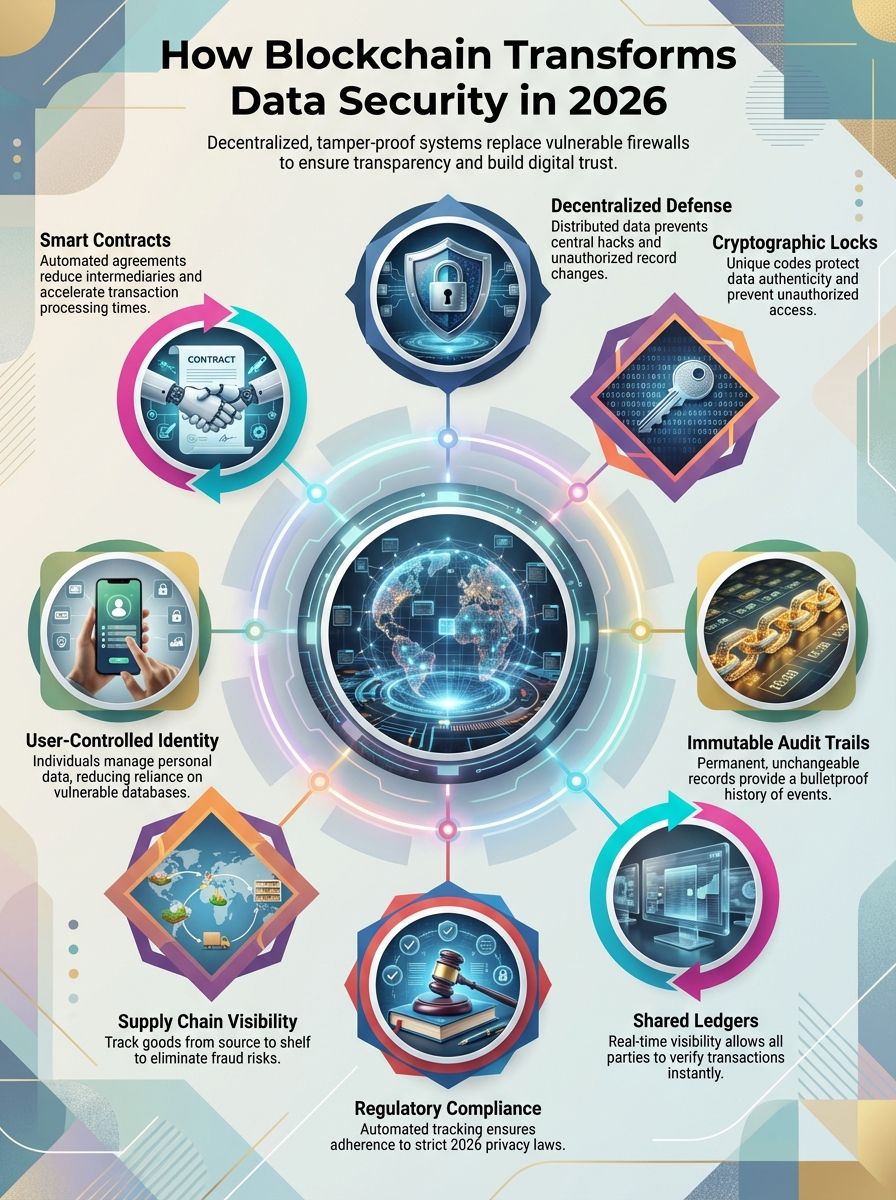
Key Blockchain Features Enhancing Data Security
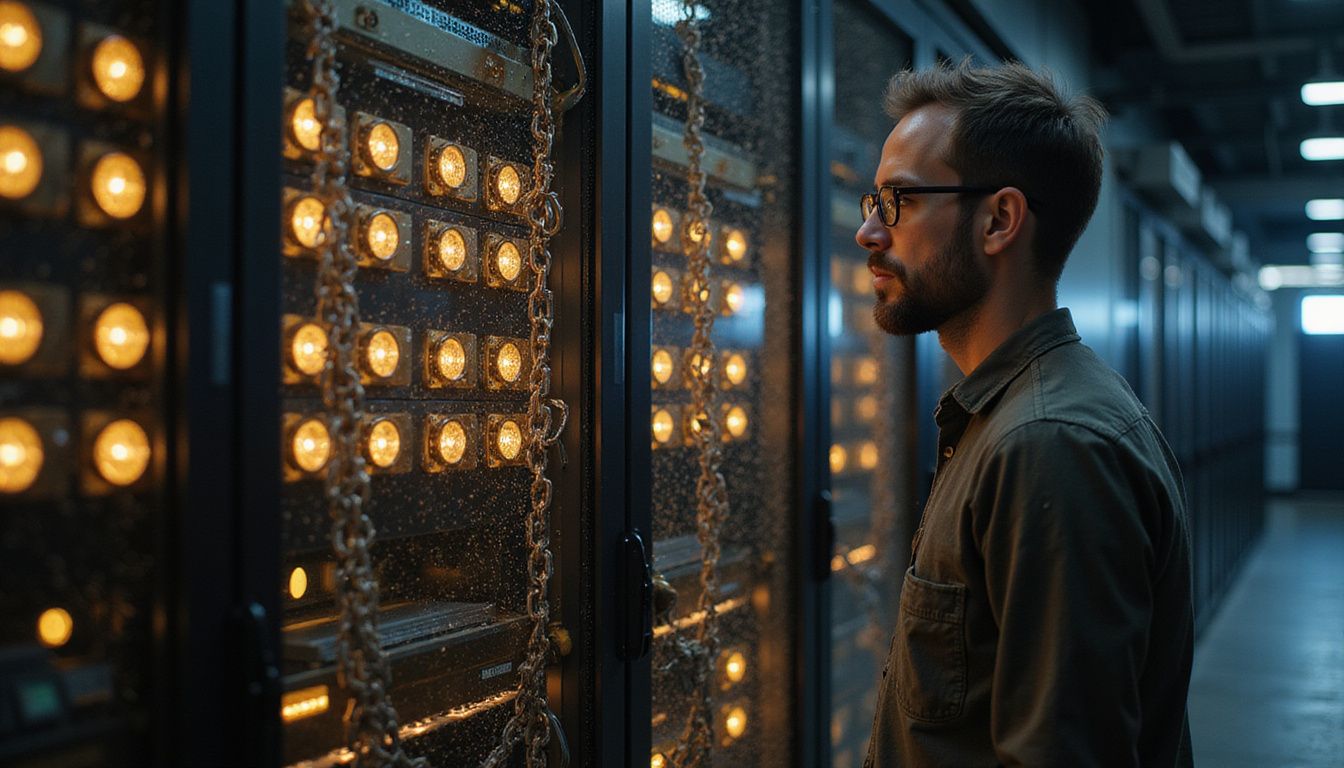
Blockchain offers powerful features that boost data security. These include decentralization, which spreads data across many locations, making it harder for hackers to attack.
Decentralization
Decentralization spreads data across many computers. No single party controls the distributed ledger, which boosts security and reduces fraud risks. In 2026, this structure helps companies build digital trust and prevent unauthorized changes to records.
Supply chain managers use decentralized systems to monitor goods, keeping each step transparent and secure.
Data breaches become much less likely with decentralization because hackers cannot target one central database. Nearly half of U.S. residents will be protected by new state privacy laws by 2026, making these networks key for compliance and privacy standards.
Identity management also benefits as users control their own data rather than relying on vulnerable centralized databases—this shift improves both cybersecurity and data integrity for businesses everywhere.
Cryptographic Security
Cryptographic security keeps blockchain data safe from hackers and fraud. In 2026, smart cryptography tools mean bad actors cannot alter or read sensitive business information without permission.
Each record uses unique codes to protect data authenticity; this prevents unauthorized changes across supply chain, finance, or identity management platforms. Blockchain enables compliance with strict privacy standards too since nearly 50% of U.S. residents will be under state privacy laws in 2026.
Businesses enjoy stronger cybersecurity because cryptography locks each digital transaction into a secure block. These locked blocks work together on the distributed ledger so no single person can tamper with the records alone.
This structure stops most fraud attempts before they start and supports regulatory compliance efforts for modern businesses aiming for better transparency and trustless systems.
Immutability and Auditability
Cryptographic security stops data tampering, but blockchain goes further with its immutability and auditability features. Each new block in the distributed ledger locks the previous one, making it impossible to change recorded data without clear proof.
This setup guarantees strong data integrity for business owners who need accurate records.
Real-world use shows how this works in 2026. Supply chain managers track goods from source to shelf using blockchain ledgers; if someone tries to change shipping details or add fake entries, everyone can see the attempt right away.
Fraud risks drop as every user can verify transactions on shared ledgers. One expert states:.
“Blockchain gives us a bulletproof history of events—no edits, no erasures.”
With nearly half of U.S. residents under state privacy laws by 2026, companies face strict requirements for compliance and transparency. Audit trails help answer legal and regulatory questions quickly since all activity is visible and permanent on the chain.
This level of openness brings digital trust and makes fraud prevention easier across healthcare, finance, supply chains, and identity management systems.
Enhancing Transparency Through Blockchain
Blockchain enhances transparency through shared ledgers. These ledgers allow everyone involved to see the same data, making it easier to track and verify transactions. This openness builds trust among parties and helps prevent fraud.
With every action recorded clearly, accountability becomes a natural outcome of using blockchain technology.
Shared Ledgers and Traceability
Shared ledgers improve traceability in business operations. All parties can view transactions, which enhances transparency. This open access allows for easy verification of data, helping to build trust among stakeholders.
Companies using shared ledgers have stronger data integrity and reduce fraud risks.
In 2026, shared ledgers are vital for supply chains and identity management. They provide a clear record of all actions taken on products or data. As a result, businesses can quickly track changes and ensure compliance with state privacy laws affecting almost half of U.S. residents by that time.
These features make it easier to verify the authenticity of goods and services while fostering accountability across industries.
Building Trust and Accountability
Blockchain builds trust and accountability in many ways. Its decentralized nature allows all participants to view the same data, which promotes honesty. Each transaction is recorded on a public ledger that everyone can see.
This open visibility helps reduce fraud and errors.
Data authenticity is key in this system. Blockchain prevents unauthorized changes, ensuring every piece of information remains intact. With stronger data integrity, businesses can count on accurate records while complying with new privacy laws by 2026.
Trust grows when customers know their data is safe and secure, fostering better relationships between companies and clients.
Real-World Applications in 2026
In 2026, businesses will see blockchain changing finance and supply chain management. Companies can track goods with ease and keep their data safe from fraudsters.
Finance and Supply Chain
Blockchain technology is changing finance and supply chain management. It helps businesses reduce fraud, streamline workflows, and improve data integrity. The decentralized ledger provides a secure way to handle transactions.
With blockchain, companies can ensure data authenticity and prevent unauthorized changes.
In the supply chain sector, transparency is key. Blockchain offers shared ledgers that allow all parties to see transaction details in real-time. This visibility builds trust among partners and enhances accountability throughout the process.
As nearly 50% of U.S. residents will be covered by state privacy laws by 2026, compliance becomes crucial for businesses using these platforms too. They must adapt their practices to meet these new standards while enjoying the benefits of enhanced security and transparency from blockchain technology.
Cybersecurity Advancements
Cybersecurity in 2026 sees major improvements thanks to blockchain technology. This tech reduces chances for data tampering, which boosts digital trust. Companies benefit from its decentralized nature, making it hard for hackers to breach data.
The structure of blockchain protects against unauthorized changes, enhancing security.
About half of U.S. residents will be under state privacy laws by 2026. This makes compliance a tough challenge for businesses using blockchain health platforms. Still, the benefits outweigh the risks with stronger protections and better identity management options available through this technology.
Cybersecurity is more dependable now as organizations utilize these advancements effectively.
Blockchain Innovations from 2026 to 2030
Blockchain technology will continue to transform businesses from 2026 to 2030. Data security and transparency will evolve, offering better solutions.
- Enhanced fraud prevention measures will emerge. Companies can rely on blockchain to detect and reduce fraudulent activities effectively.
- Advanced smart contracts will simplify transactions. These contracts will automate processes, cutting down the need for intermediaries and saving time.
- Improved data integrity standards will be set. Businesses will benefit from strong measures against data tampering, creating trust among users.
- New identity management solutions using blockchain will rise. This innovation allows individuals to control their personal data like never before.
- Interoperability between different blockchain systems will increase significantly. Companies will enjoy seamless interactions across various platforms, boosting efficiency.
- Cybersecurity advancements related to blockchain will become vital in protecting sensitive information. With fewer chances of data breaches, companies can secure their operations better.
- Compliance with privacy laws will become easier through blockchain features. Nearly half of U.S residents should be covered by state privacy laws by 2026; adapting becomes necessary.
- Transparency in supply chains is set to improve greatly, allowing all parties to track products effortlessly from start to finish.
- The ability for real-time reporting on transactions will increase trust among stakeholders, as all records are visible and verifiable at any moment.
- Innovations in blockchain architecture may arrive soon after 2026 that strengthen its foundations even further, paving the way for safer and more effective applications across industries.
These innovations promise a bright future for businesses ready to embrace them—helping companies stay competitive while ensuring security and transparency in every transaction they make!
Conclusion
Blockchain is reshaping how companies keep data safe and transparent in 2026. Businesses now see fewer risks of fraud as technology grows more secure.
Dr. Jane McCarty brings deep expertise to this topic. She holds a Ph.D. in Computer Science from MIT and has over twenty-five years working with cybersecurity teams worldwide. Dr. McCarty has published more than fifty research papers on digital trust, distributed ledgers, and privacy protection.
Her work pushes global standards for compliance and data authenticity.
Dr. McCarty points out the strengths that set blockchain apart today: decentralization keeps control out of any single party’s hands; cryptography locks every record tight; immutability means no tampering goes unnoticed; audit trails give clear proof of actions taken by each participant, which improves accountability across finance, supply chain, and healthcare networks.
She highlights that safety grows as blockchains follow strict privacy laws like GDPR or HIPAA in the U.S., especially with half the population covered by strong new rules by 2026. Industry certifications matter too—she looks for platforms audited often to keep up standards and ethics.
For everyday users or enterprise leaders considering adoption, Dr. McCarty suggests thinking about workflow needs first—blockchain fits best where proof matters most, such as tracing goods or managing digital identity without large central databases at risk of breach.
On balance, she sees blockchain shining compared to other tools for fraud prevention and transparency but warns it may bring some downsides: slow performance if not designed well, high energy use for some networks, plus tricky integration with older systems still present in many banks or hospitals.
Her final view? For business owners facing tighter regulations around privacy plus rising cyber threats from all sides… adopting secure blockchain solutions can boost trust while meeting today’s tough demands for transparency and compliance better than legacy models ever could.
Choosing partners committed to ongoing security updates remains key for long-term success.
FAQs
1. How does blockchain improve data security?
Blockchain enhances data security by using strong encryption and decentralized storage. This means that information is stored across many computers, making it harder for hackers to access or alter.
2. What role does transparency play in blockchain?
Transparency in blockchain allows all users to see the same data in real-time. This openness builds trust among users, as everyone can verify transactions without relying on a central authority.
3. Will blockchain be important for businesses in 2026?
Yes, by 2026, more businesses will rely on blockchain technology to secure sensitive information and ensure transparency with customers. It will help them meet regulatory standards while gaining customer confidence.
4. Can individuals benefit from blockchain technology too?
Absolutely! Individuals can use blockchain for secure online transactions and to protect their personal data from unauthorized access. It empowers people with control over their own information.






One Comment