
Technology is changing faster than ever. From artificial intelligence and robotics to smart devices and blockchain, new innovations are transforming how we work, communicate, shop, travel, and live.
The technology trends 2026 landscape is especially exciting because many technologies that were once experimental are becoming practical tools for businesses and consumers.
In this guide, we explore the biggest technology trends 2026 that are expected to shape the future and create new opportunities across different industries.
1. Artificial Intelligence Is Becoming More Powerful
Artificial intelligence (AI) remains one of the biggest technology trends 2026.
AI is moving beyond simple chatbots and search tools. Businesses are using AI to analyze data, automate repetitive tasks, create content, improve customer service, and support decision-making.
AI-powered systems can also work with text, images, audio, video, and other types of information. This makes AI useful across industries such as healthcare, finance, education, marketing, and manufacturing.
Why it matters: AI can help businesses save time, reduce costs, and deliver more personalized experiences.
2. AI Agents Will Automate More Tasks
One of the most important developments in AI is the rise of AI agents.
Unlike traditional AI tools that mainly respond to individual requests, AI agents can be designed to complete multi-step tasks. For example, an AI agent could research information, organize data, create a report, and prepare it for review.
Companies are increasingly exploring AI agents for customer support, software development, sales, research, and business operations.
As these systems become more capable, knowing how to manage and supervise AI will become an important digital skill.
3. Robotics Will Enter More Areas of Daily Life
Robotics is another major part of the technology trends 2026 conversation.
Modern robots are becoming more capable of understanding their surroundings and performing complex tasks. Businesses are using robots in warehouses, factories, logistics, agriculture, and other environments.
Humanoid robots are also receiving significant attention as companies explore machines that can perform tasks designed for human environments.
The long-term goal is not simply to replace human workers. In many situations, robots can perform dangerous, repetitive, or physically demanding tasks while people focus on activities requiring creativity, judgment, and communication.
4. Quantum Computing Continues to Develop
Quantum computing uses principles of quantum mechanics to process information in fundamentally different ways from traditional computers.
Although large-scale practical quantum computing is still developing, researchers and technology companies are working to improve quantum hardware, error correction, and useful applications.
Potential applications include drug discovery, advanced materials, optimization, financial modeling, and scientific research.
Quantum computing may not become an everyday consumer technology soon, but its long-term impact could be significant.
5. Cybersecurity Becomes More Important
As businesses become increasingly digital, cybersecurity is becoming a critical priority.
Cybercriminals are using increasingly sophisticated techniques, while organizations are storing more valuable information online. AI can also be used by both security professionals and attackers.
Businesses are therefore investing in stronger authentication, threat detection, encryption, employee training, and automated security systems.
In 2026, cybersecurity is not just an IT concern. It is an essential part of protecting customers, employees, businesses, and digital infrastructure.
6. Blockchain and Digital Assets Continue to Evolve
Blockchain technology remains an important area of innovation.
Beyond cryptocurrencies, blockchain can support applications involving digital ownership, payments, decentralized applications, tokenization, and data verification.
Businesses and financial institutions are exploring ways to use blockchain to make transactions and digital processes more transparent and efficient.
The future of blockchain will depend heavily on usability, regulation, security, and real-world adoption.
7. Smart Devices and the Internet of Things
The Internet of Things (IoT) connects physical devices to the internet so they can collect, exchange, and process data.
Smart homes, connected vehicles, wearable devices, industrial sensors, and smart-city systems are examples of IoT technology.
As connectivity improves, devices will increasingly work together automatically.
For consumers, this can mean smarter homes and more convenient services. For businesses, IoT can improve equipment monitoring, inventory management, energy efficiency, and operations.
8. Extended Reality Is Expanding
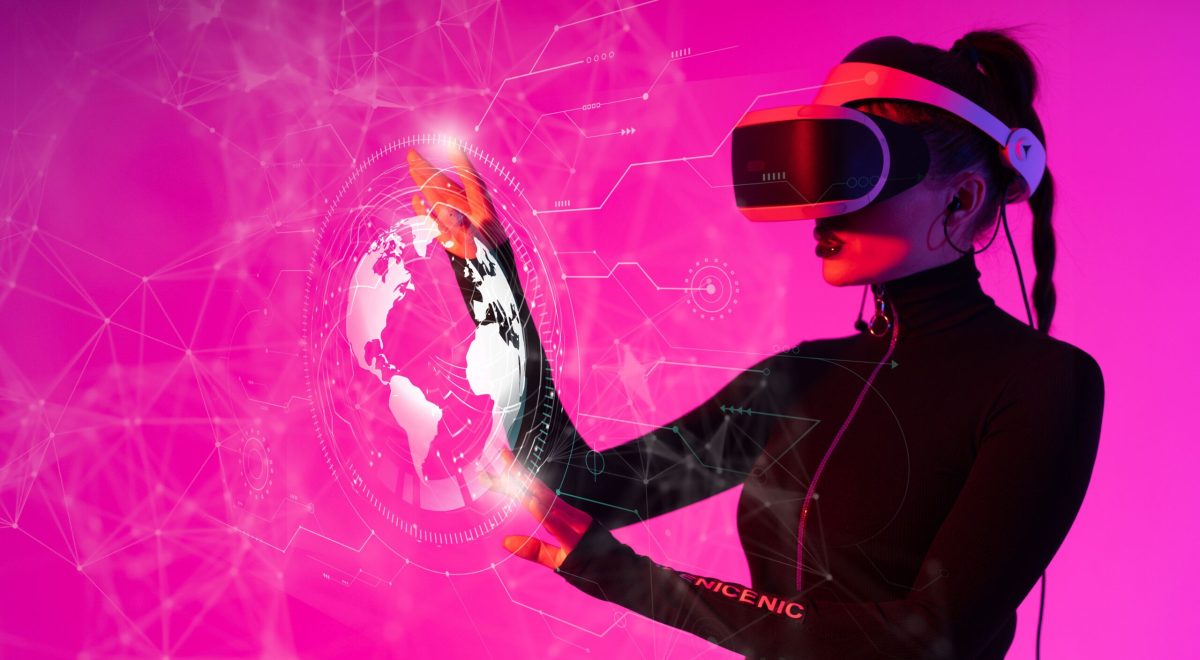
Virtual reality (VR), augmented reality (AR), and mixed reality (MR) are collectively known as extended reality (XR).
These technologies can create immersive digital experiences or place digital information into the real world.
Gaming remains an important use case, but XR is also being explored for education, training, healthcare, engineering, retail, and remote collaboration.
As hardware becomes more comfortable and software improves, XR could become a more practical technology for both consumers and businesses.
9. Green Technology and Clean Energy
Climate concerns are encouraging companies and governments to invest in cleaner technologies.
Solar power, energy storage, electric vehicles, smart grids, energy-efficient buildings, and other clean technologies are becoming increasingly important.
Artificial intelligence can also help optimize energy consumption and improve the management of power networks.
Green technology is therefore not only an environmental issue. It is becoming an important part of the global technology and business landscape.
10. Biotechnology and Digital Healthcare
Technology is transforming healthcare through AI, wearable devices, telemedicine, digital health platforms, and advanced biotechnology.
AI can help researchers analyze large datasets and assist healthcare professionals with certain types of medical analysis.
Wearable devices can also monitor various health-related measurements and provide users with more information about their daily activities.
At the same time, biotechnology is advancing areas such as personalized medicine and drug discovery.
These developments could make healthcare more data-driven, personalized, and accessible, although privacy, safety, and regulation remain important considerations.
11. Edge Computing Will Support Faster Services
Edge computing processes data closer to where it is generated instead of sending everything to a distant data center.
This can reduce latency and improve the performance of applications that need fast responses.
Edge computing is particularly useful for autonomous systems, industrial IoT, smart cities, connected vehicles, and real-time monitoring.
As billions of devices generate more data, processing some information closer to the source can become increasingly valuable.
12. 5G and Next-Generation Connectivity
Fast and reliable connectivity is essential for many modern technologies.
5G networks are supporting applications that require high speeds and low latency, while researchers and companies are already exploring the possibilities of future connectivity technologies.
Better connectivity can support smart factories, connected vehicles, remote services, immersive experiences, and massive numbers of connected devices.
Connectivity will continue to act as the foundation for many of the other technology trends 2026 discussed in this article.
What Do These Technology Trends Mean for Businesses?
The biggest lesson from the technology trends 2026 landscape is that businesses need to adapt.
Companies that effectively use emerging technologies can improve productivity, reduce operating costs, understand customers better, and create new products and services.
However, businesses should not adopt technology simply because it is popular.
Before investing in a new technology, companies should consider:
- What problem does it solve?
- How much will it cost?
- Can it improve productivity or customer experience?
- What security risks does it create?
- Does the organization have the skills to use it?
- How will employees and customers be affected?
A practical technology strategy is usually more valuable than simply following every new trend.
How to Prepare for the Future of Technology
You do not need to become an expert in every new technology.
Instead, focus on understanding the technologies that are most relevant to your industry or career.
Start by developing digital skills, learning how AI tools work, improving cybersecurity awareness, and following important technology developments.
Businesses should also encourage employees to learn new skills and experiment responsibly with emerging technologies.
The ability to adapt may become one of the most valuable skills in a rapidly changing digital economy.
Final Thoughts
The technology trends 2026 landscape is being shaped by AI, robotics, quantum computing, cybersecurity, blockchain, IoT, extended reality, clean technology, biotechnology, and advanced connectivity.
Some of these technologies are already changing everyday life, while others are still developing.
The most important thing is not predicting exactly which technology will dominate the future. It is understanding how technological change can create new opportunities and challenges.
For individuals and businesses alike, staying informed, developing useful digital skills, and adapting to change will be essential.
The future of technology is arriving quickly—and 2026 is another important year in that transformation.
Frequently Asked Questions
What are the biggest technology trends 2026?
Some of the biggest technology trends in 2026 include artificial intelligence, AI agents, robotics, cybersecurity, quantum computing, blockchain, IoT, extended reality, green technology, and biotechnology.
Why is AI one of the biggest technology trends 2026?
AI is becoming more capable and useful across many industries. Businesses are using it for automation, content creation, customer service, data analysis, software development, and decision support.
Will technology create more jobs in the future?
Technology can automate some tasks while creating demand for new skills and roles. The impact will vary by industry, so continuous learning and adaptability will be increasingly important.
What technology should businesses invest in?
Businesses should focus on technologies that solve real problems and provide measurable value. AI, cybersecurity, cloud and edge computing, automation, and data technologies may be particularly useful depending on the organization’s needs.
How can I keep up with new technology trends 2026?
Follow reliable technology news, learn practical digital skills, experiment with relevant tools, and regularly evaluate how emerging technologies could affect your career or business.